Wind Turbine Blade Inspection
Autonomous Aerial Inspection · Aritonomy
The Mission
Inspecting wind turbine blades is one of the most hazardous jobs in energy infrastructure. Technicians must climb towers that can exceed 100 meters — in wind, cold, and often in the very conditions that accelerate blade wear — to visually assess surfaces for cracks, erosion, delamination, and impact damage. A single inspection is physically grueling and carries real safety risk. At scale across a wind farm, it is operationally prohibitive.
The solution developed at Aritonomy and its predecessor companies replaced human climbers with autonomous UAS platforms carrying high-resolution cameras and sensing payloads. The drone flies systematic coverage passes over all four sides of each blade — which can reach up to 40 meters in length — capturing the surface at a resolution high enough to resolve millimeter-scale damage features. Technicians stay on the ground.
Damage Detection
Raw inspection imagery feeds into machine learning models trained to detect and classify surface damage — distinguishing crack types, erosion patterns, leading edge damage, and delamination from one another and from undamaged surface. The classification matters operationally: different damage types call for different repair approaches and have different urgency profiles, so a model that only flags anomalies without identifying them is only half the solution.
Training these models on real blade imagery — captured in field conditions, with variable lighting, blade curvature, and surface texture — requires large, carefully annotated datasets drawn from actual inspection campaigns across multiple turbine types and geographic environments.
The Background Problem
Before a model can learn to recognize damage, it has to learn to see only the blade. A raw inspection frame contains sky, clouds, the tower structure, the ground far below, and whatever else the drone happened to frame during its pass. A model trained on those frames without isolation will learn that blades appear against blue sky — and will fail whenever the lighting, angle, or background changes.
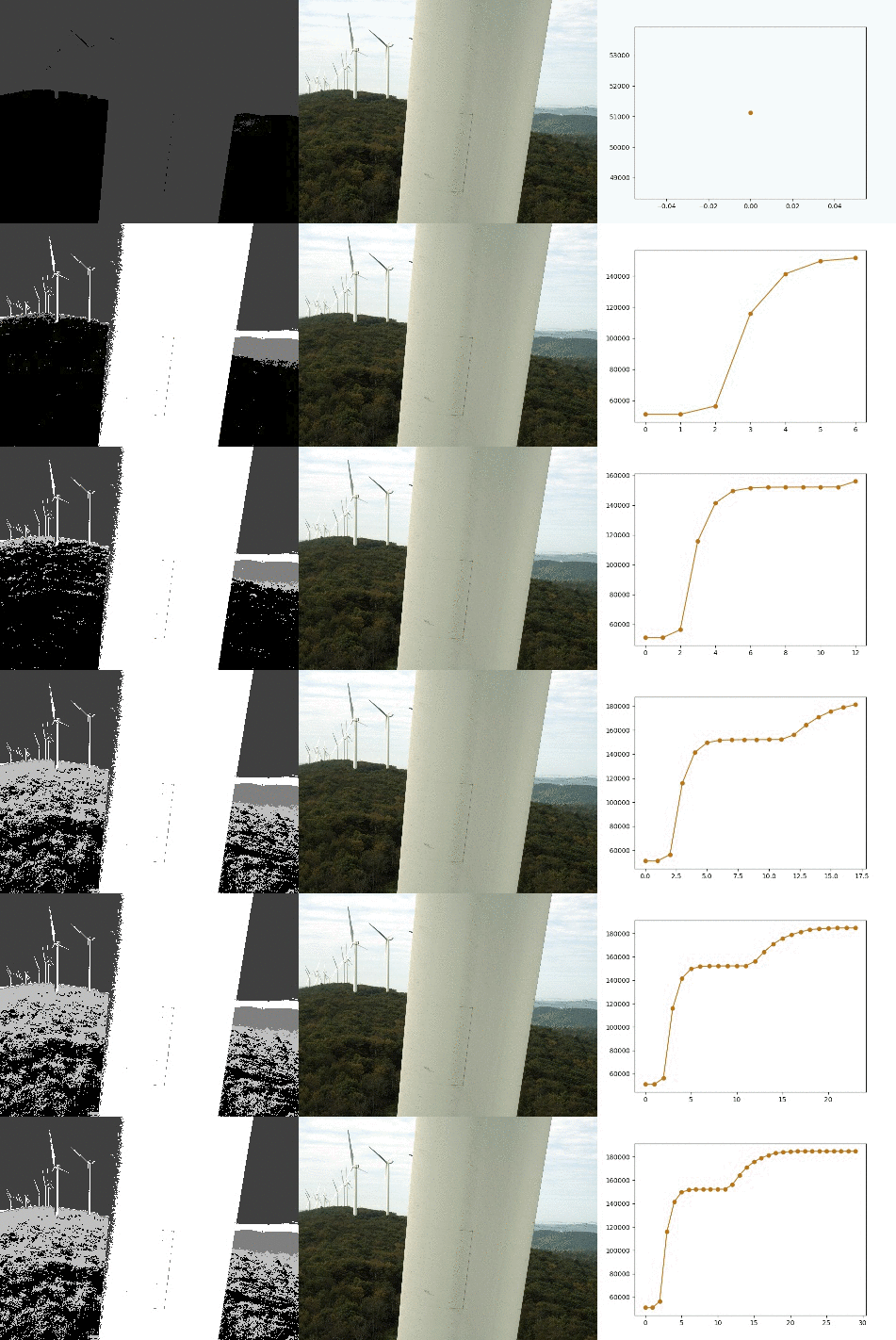
Getting the background out is harder than it sounds. The blade surface is a curved, textureless, often uniformly colored object against a constantly changing sky. Classic segmentation approaches struggle with the lack of texture and the color similarity between certain blade finishes and overcast sky. The animation below captures one piece of that effort — the progressive isolation of a blade region containing a crack, separating the damage signal from everything around it.