SPECTRA
Structured Platform for Enhanced Cross-modal Training and Research Annotation
Overview
SPECTRA is a universal, multi-user annotation and data management platform designed for machine learning research projects that deal with heterogeneous data. Born out of the practical annotation needs of the Blackbird Detection project, it quickly became clear that the problem — managing multimodal field data, coordinating annotators, tracking model versions, and maintaining data provenance — is not specific to birds. SPECTRA is built to serve any ML project that works with real-world, multi-source data.
The platform is currently under active development as a master's research project.
Data Modalities
- Video — import, browse, and isolate individual frames for annotation
- Imagery — RGB and infrared (IR) frame annotation and cross-modal registration
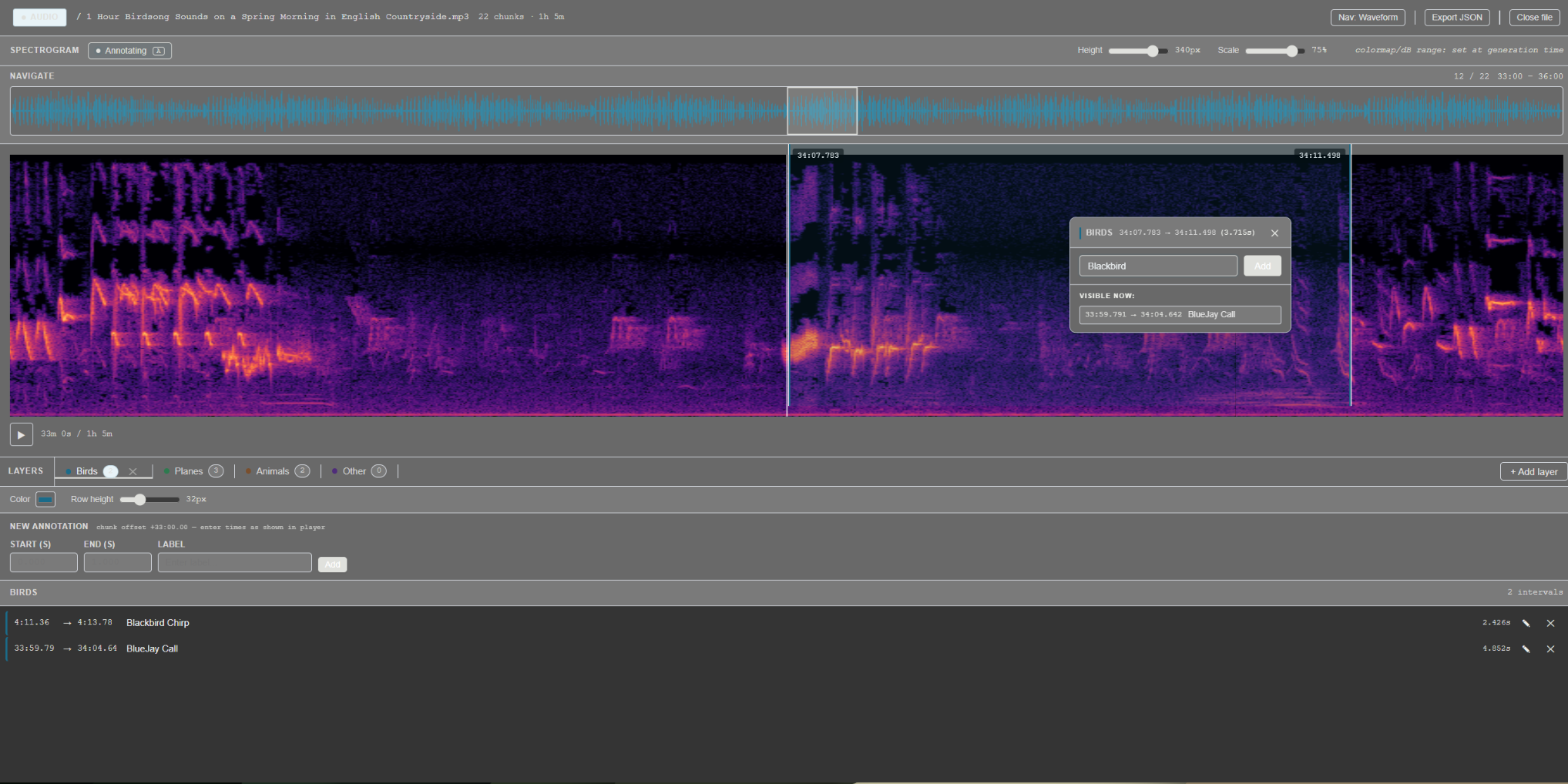
- Acoustic — generate, save, and annotate spectrograms directly from audio recordings
- Time Series — log, visualize, and label temporal sensor data
Platform Features
- Multi-user collaboration — project-based team structure with user registration and role assignment
- Data & annotation ownership — fine-grained ownership and sharing controls for datasets, annotations, and trained models
- Model & version logging — tracks which data was used to train which model version and logs associated results
- Annotation quality control — built-in QC workflows to review, validate, and flag annotations across annotators
- Project management — register projects, manage contributors, and track annotation progress