BotanyBot
An Autonomous Agricultural Robotics Platform · 🌐 Project Website
The Platform
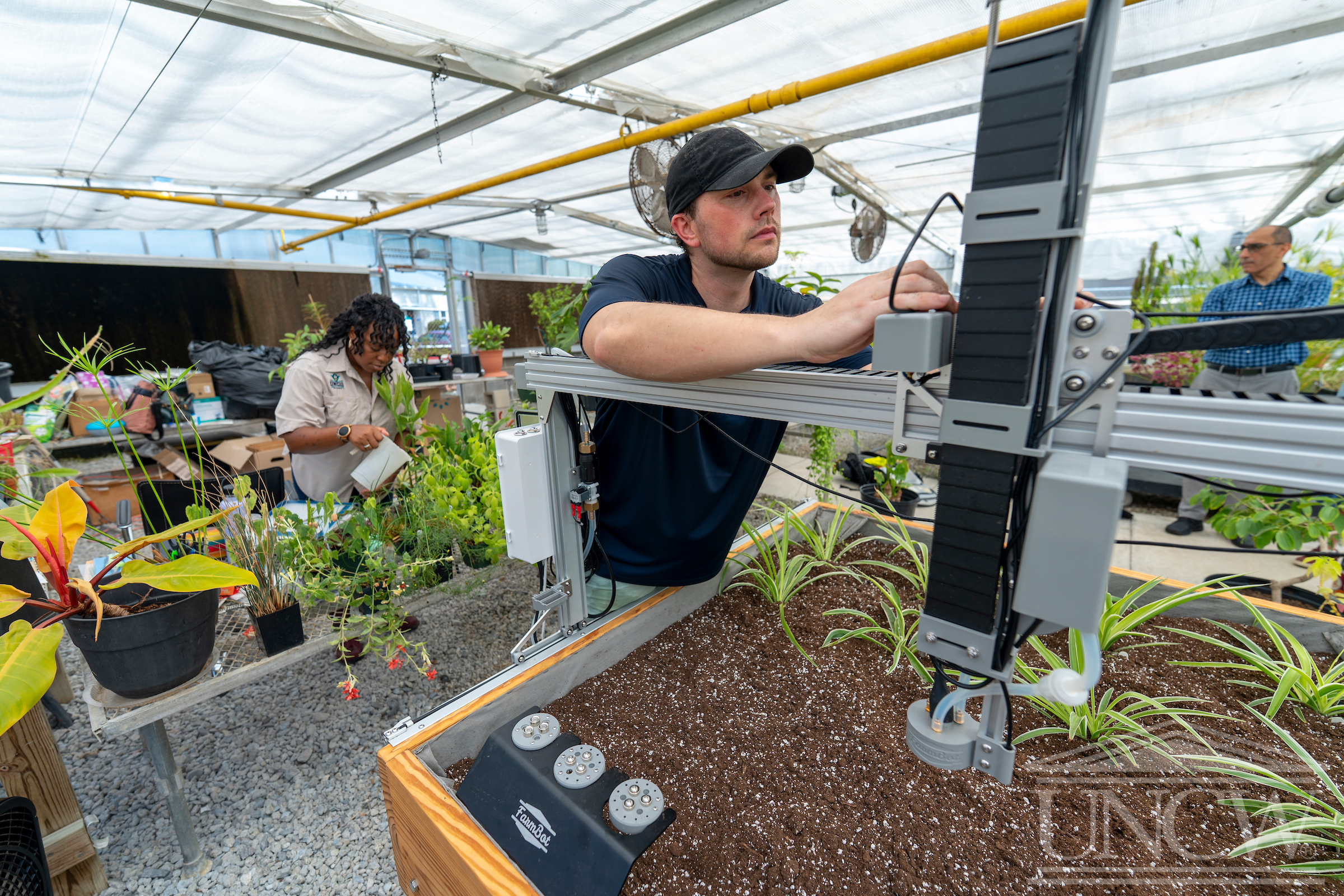
BotanyBot began as a FarmBot — an open-source CNC agricultural robot originally controlled through a GUI-based web operating system. The platform has since been substantially rebuilt: the OS was replaced with ROS, decomposing control into communicating nodes that handle motion, sensing, actuation, and data logging independently. The long-term goal is full autonomy, with ML models replacing manual commands across all operational modes.
Beyond the research agenda, BotanyBot is a natural home for interdisciplinary collaboration at every level — undergraduate capstone projects, graduate research, and externally funded work. The combination of robotics, sensing, software, and biology means almost any CS or engineering specialization can find a meaningful foothold in the platform.
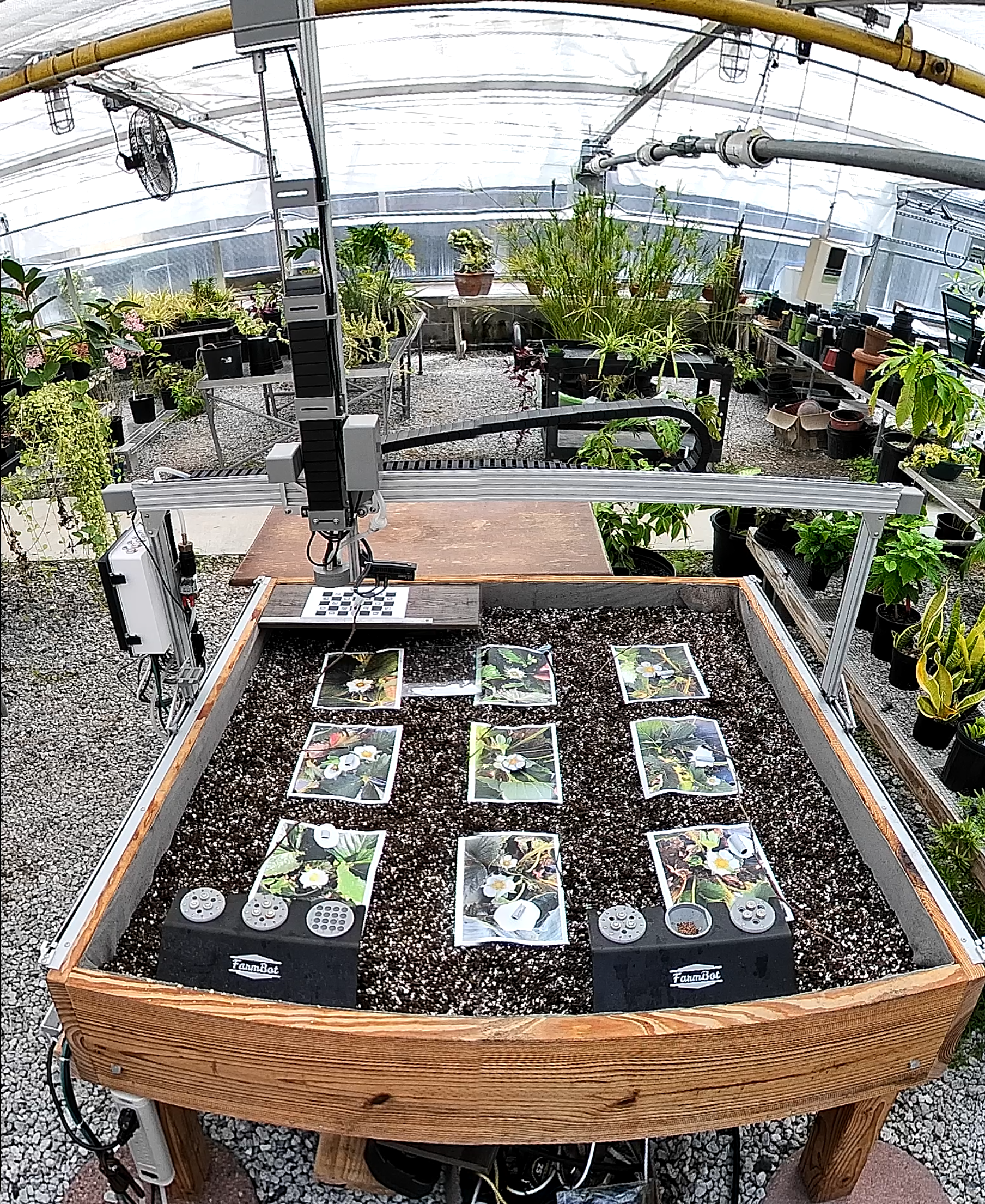
Hardware upgrades reflect that ambition. The original 2D RGB gantry camera has been replaced with a 3D camera capable of running ML inference on-device. A touchscreen has been added to the control box for direct field access, supplementing the primary SSH interface. An overhead camera mounted in the UNCW Kresge Greenhouse streams a live view of the bot and its garden bed, enabling remote monitoring and dataset collection.
Cross-Pollination
The first active research project uses BotanyBot as the deployment platform for an autonomous cross-pollination tool, currently being developed for strawberry plants. The tool is designed to operate without human intervention — identifying flowers, positioning precisely, and executing pollination without manual guidance.
The project is a joint effort between an undergraduate student leading the mechanical tool design and motion control, and a graduate student developing the machine learning component that drives autonomous operation. An early tool design concept is shown below.
Soil Nutrients & RL Control
The second project equips BotanyBot with a soil nutrient sensing tool that measures the chemical state of the growing medium in real time. Sensor readings are fed into a reinforcement learning model that decides when and how much to water and apply fertilizer — closing the loop between observation and actuation entirely in software.
The RL model is designed to incorporate additional sensor streams alongside the nutrient data, allowing the system's decisions to improve as more environmental signals become available. The goal is a self-managing growing environment that responds to actual plant needs rather than fixed schedules.