
Labs & instrumentation
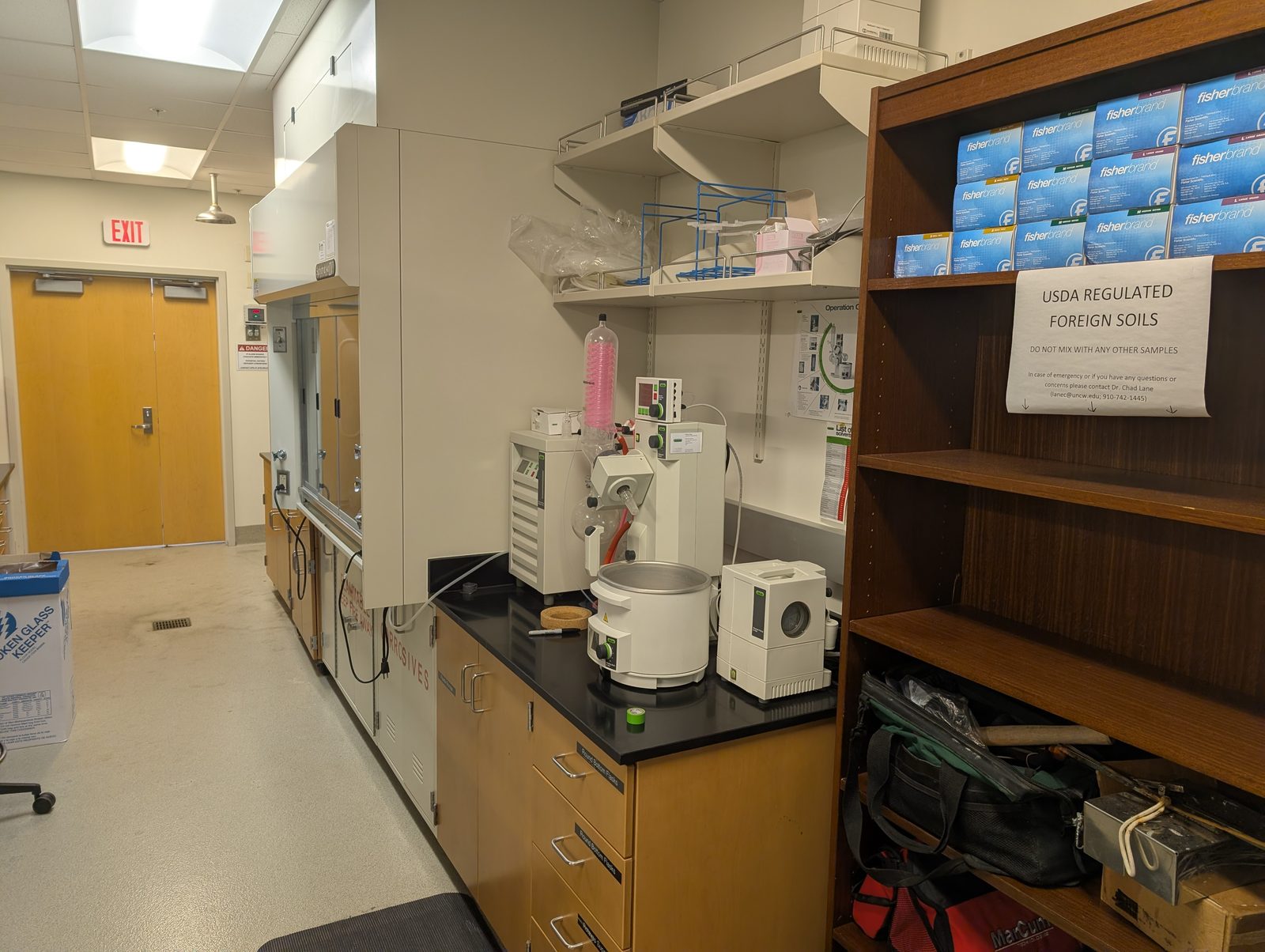
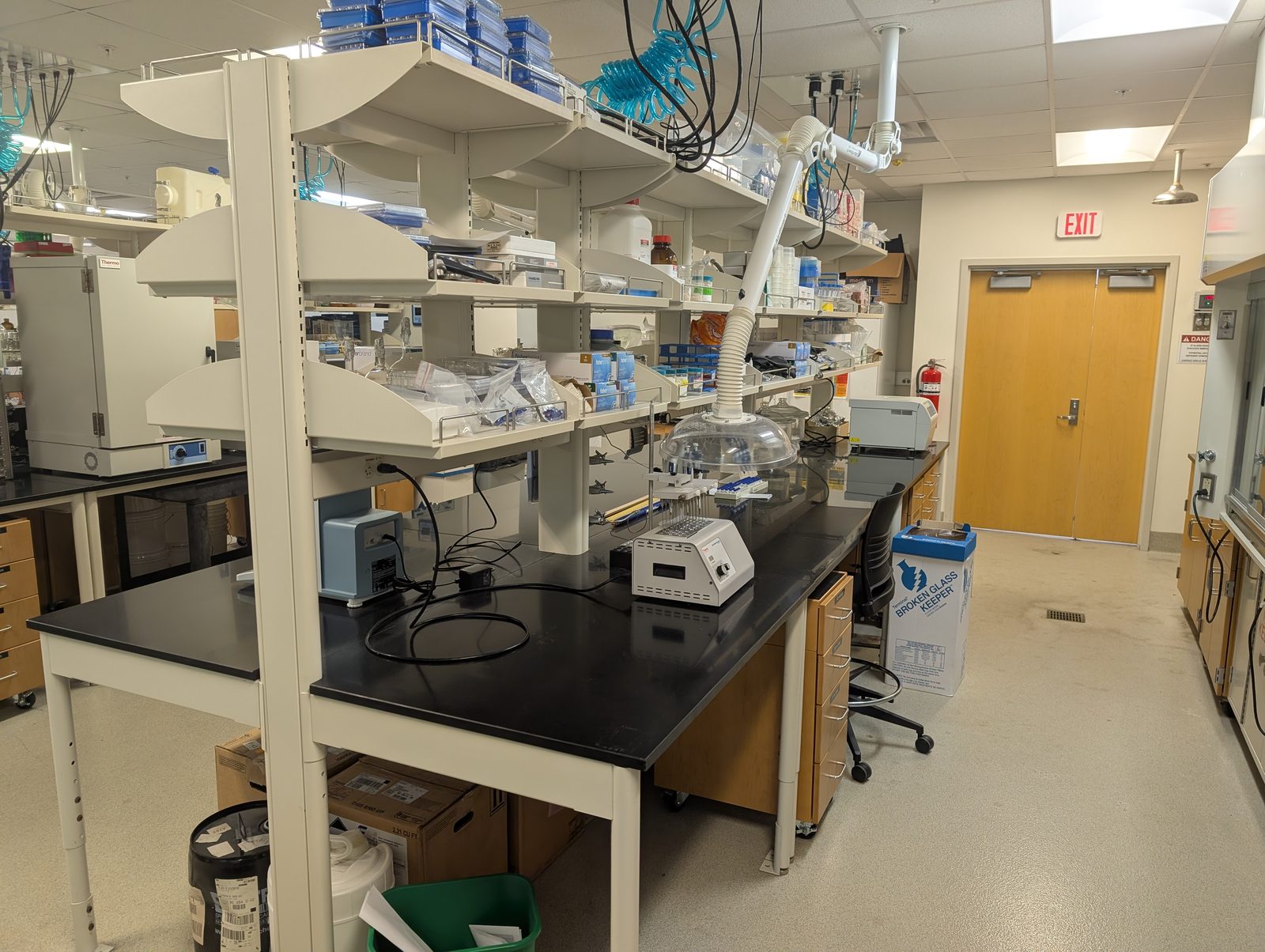
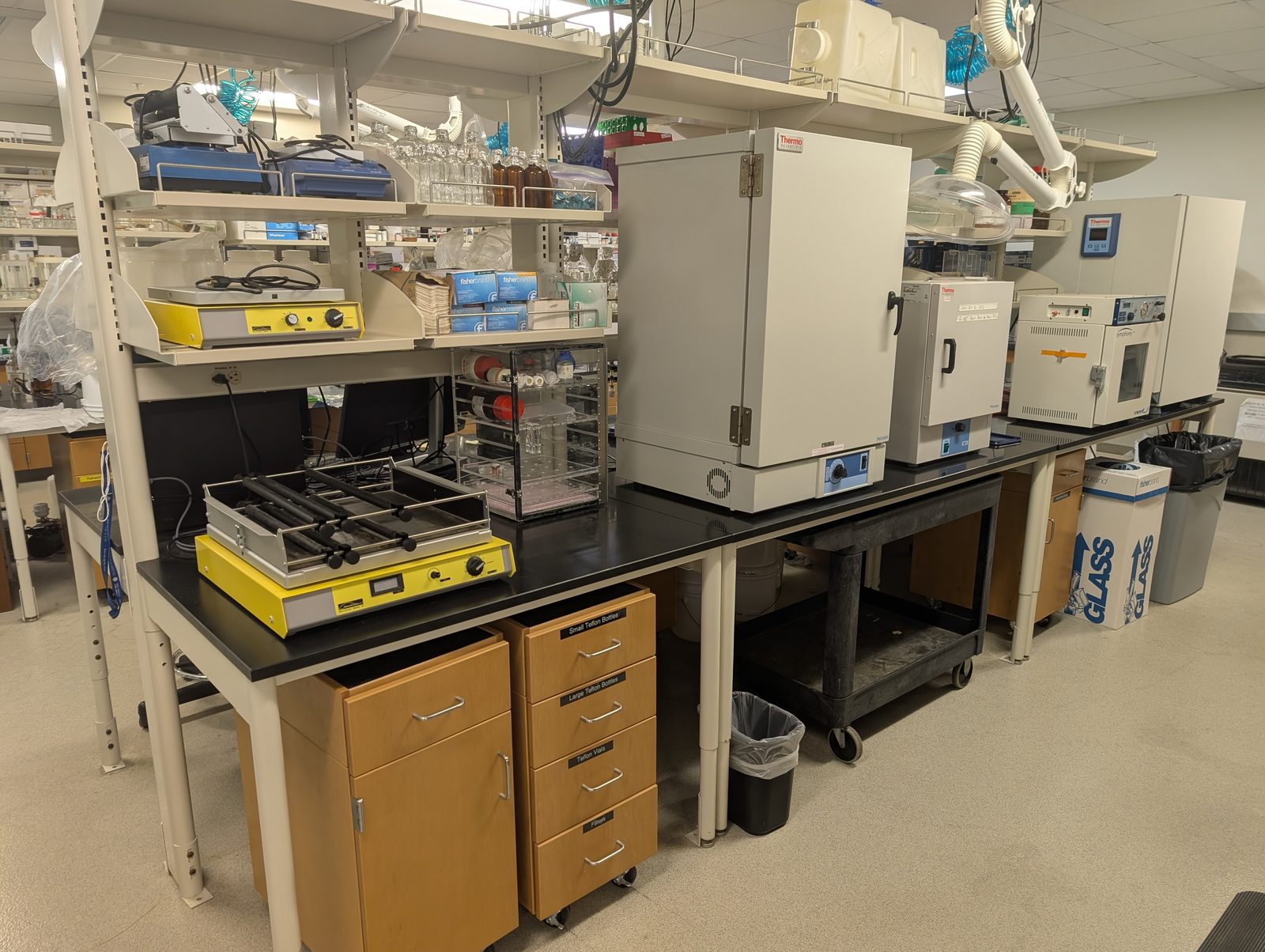
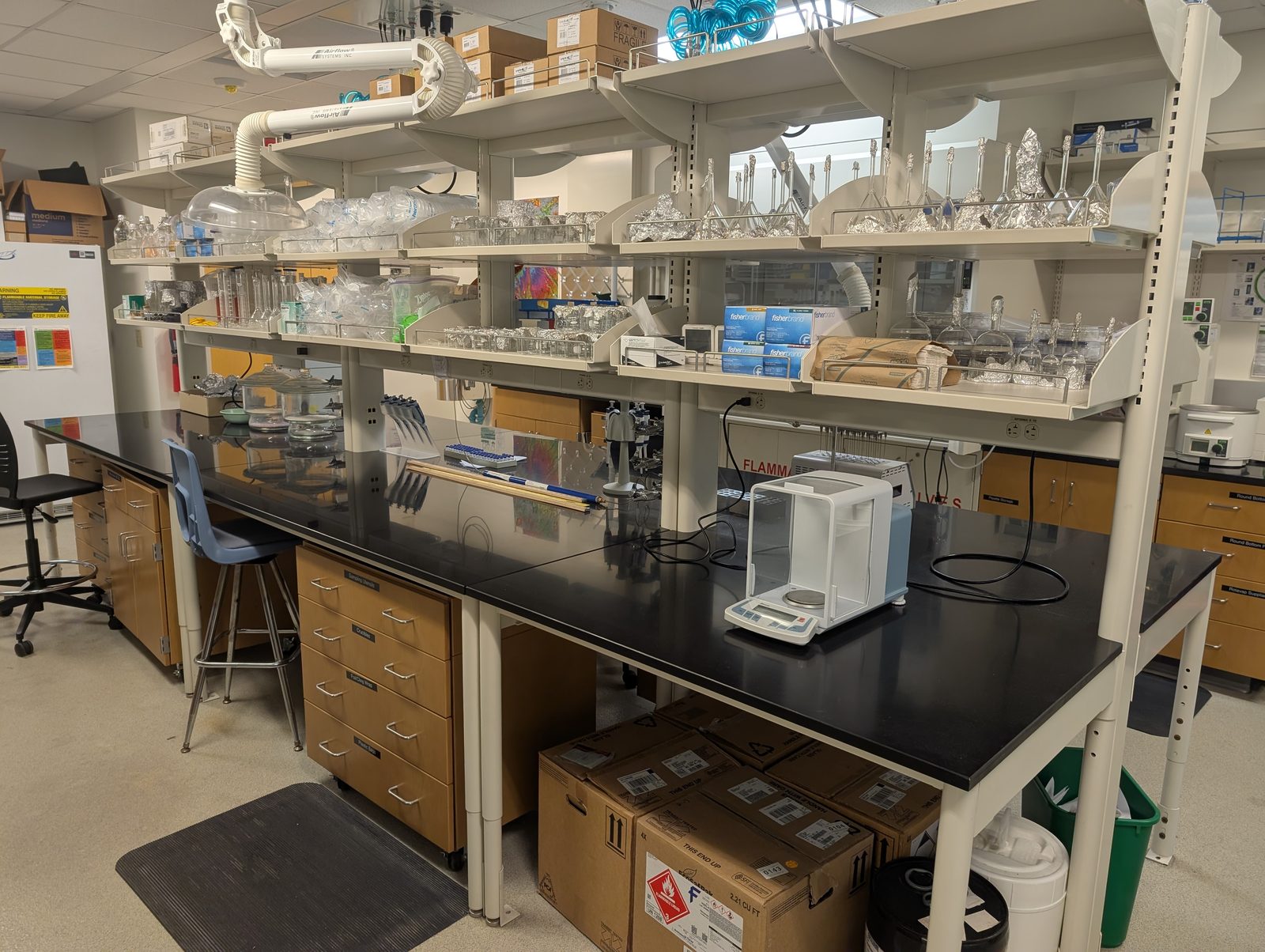
Sediment Analysis Laboratory
Equipped with two large fume hoods, refrigerated storage, a Labconco freeze drier, two convection ovens, a vacuum oven, two muffle furnaces, an ultrasonic bath, benchtop and large sample centrifuges, a Buchi rotavap, and compound and dissecting microscopes. The lab contains everything needed for fossil pollen extraction, solid-phase extraction of organic compounds, fossil charcoal analysis, macrofossil isolation, and stable isotope sample preparation.
Forensic Light Isotope and Trace Environmental Mass Spectrometry (FLITES) core facility
The FLITES core instrumentation facility is housed in and supported by the UNCW Center for Marine Science, providing a wide variety of stable isotope and trace-level mass spectrometry capabilities. The facility is also an important training resource for undergraduate and graduate students: users are expected to prepare, analyze, and interpret data from their own samples with guidance from FLITES personnel, who do not generally run analyses on users' behalf. Users unfamiliar with a given instrument or technique can consult with the facility coordinators.
Co-coordinators: Dr. Chad Lane (lanec@uncw.edu) and Dr. Ralph Mead (meadr@uncw.edu). Research Specialist: Taylor Conklin (conklint@uncw.edu).
All instrumentation listed here is available for use by UNCW researchers and collaborators. For information on using this equipment, contact Taylor Conklin (conklint@uncw.edu) or Chad Lane (lanec@uncw.edu).
FLITES supports six isotopic analysis types, including bulk and compound-specific carbon, nitrogen, hydrogen, oxygen, and sulfur measurements of organic materials, headspace gases, and purified compounds (e.g., nitrate), using IRMS and Orbitrap platforms.
The mass spectrometers
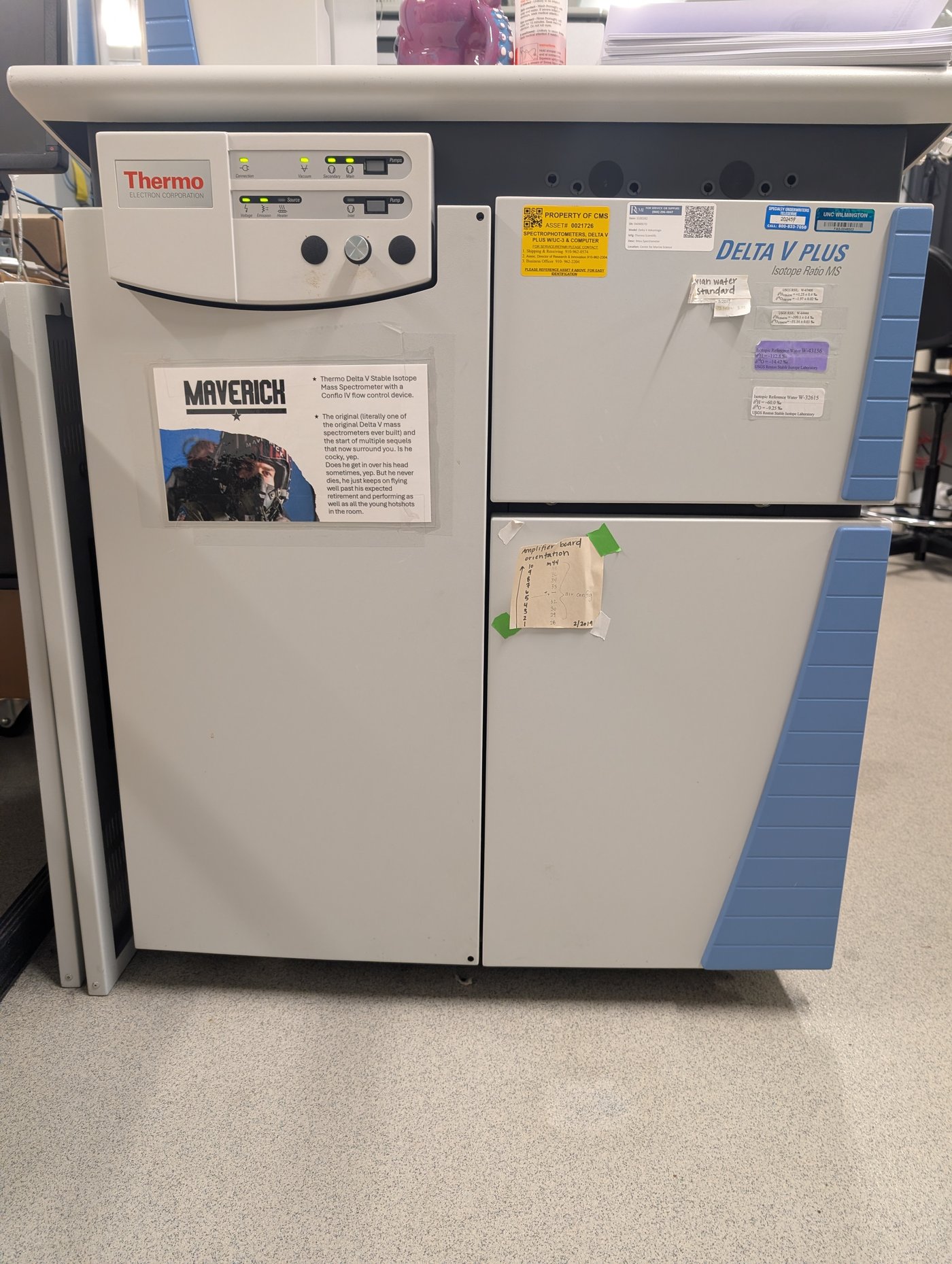
Thermo Delta V Plus Stable Isotope Mass Spectrometer
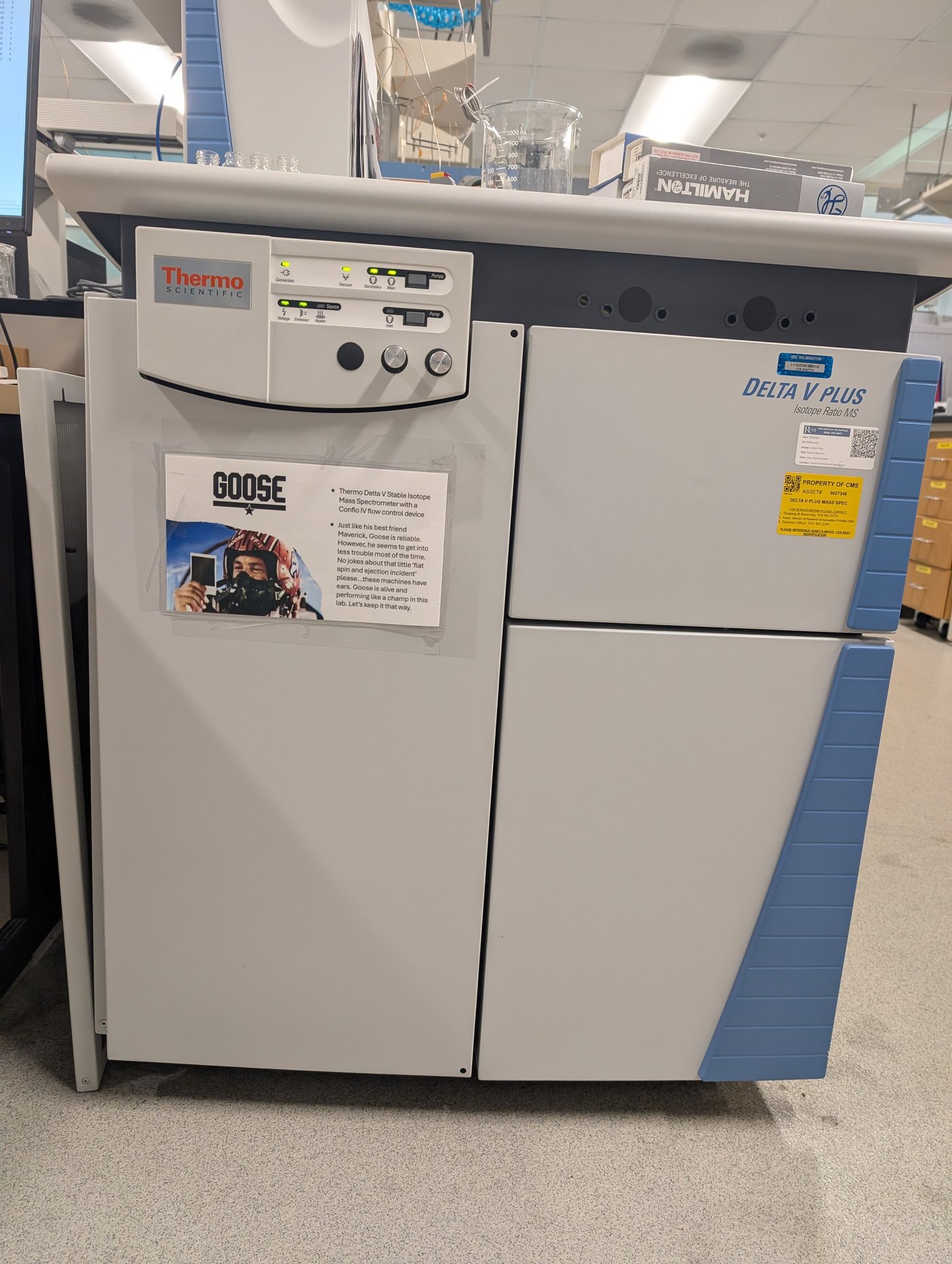
Thermo Delta V Plus Stable Isotope Mass Spectrometer
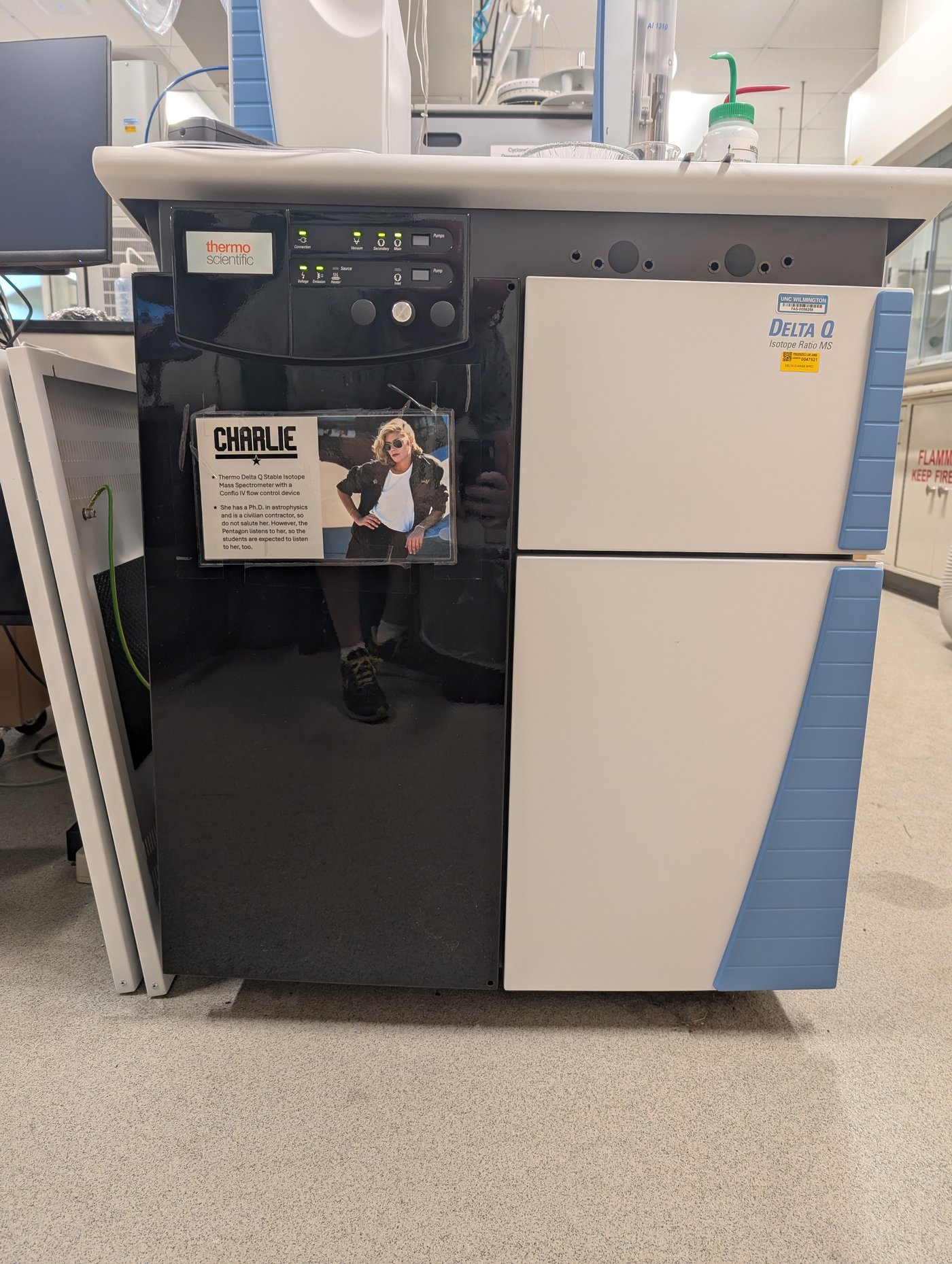
Thermo Delta Q Stable Isotope Mass Spectrometer
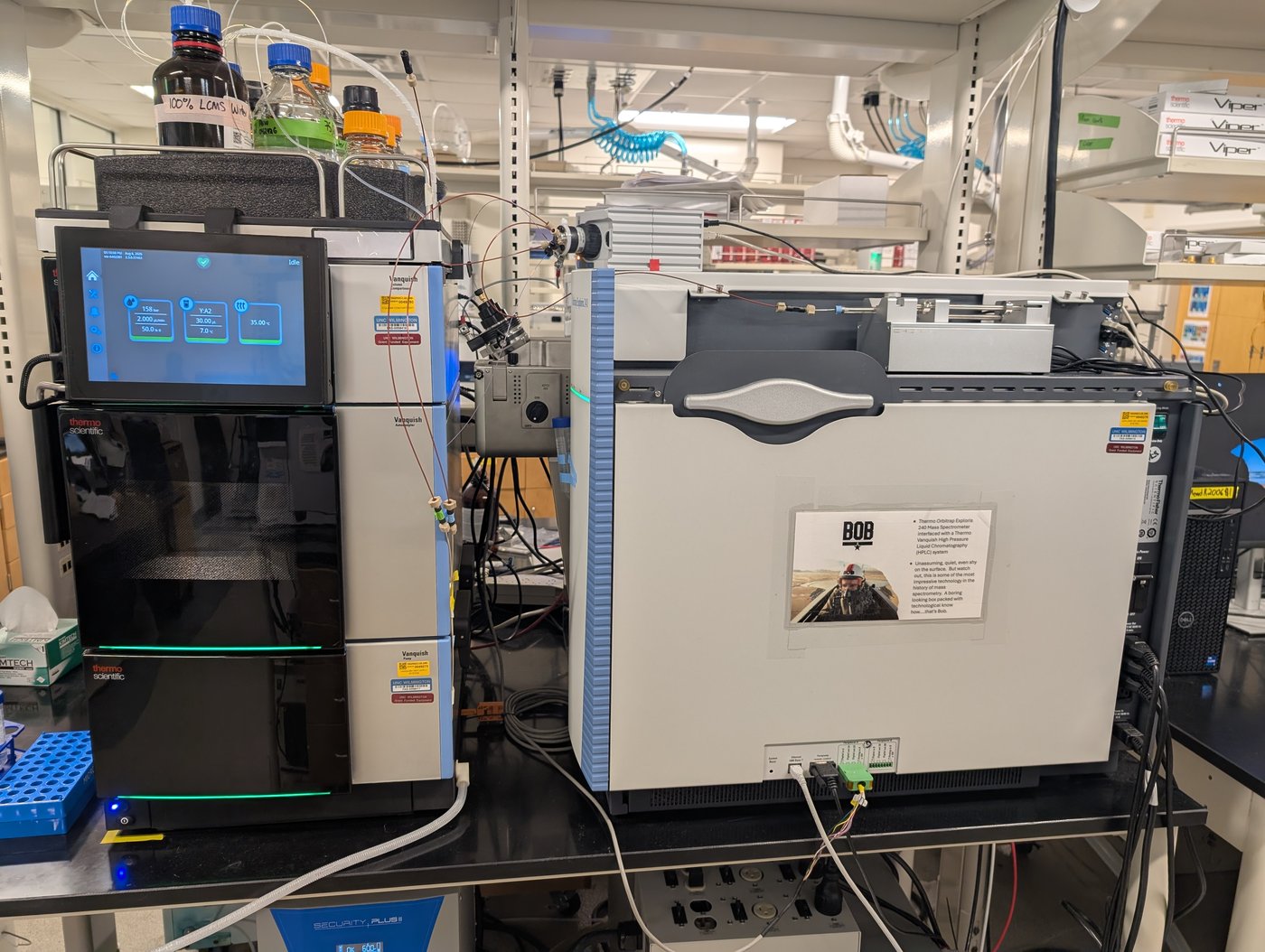
Thermo Orbitrap Exploris 240 MS with Vanquish Neo HPLC
Bob (Thermo Orbitrap Exploris 240 MS with Vanquish Neo HPLC) — multiple isotope measurements on purified, liquid-soluble compounds using the Orbitrap 240 mass spectrometer (Orbitrap-IRMS).
Bulk stable isotope analyses
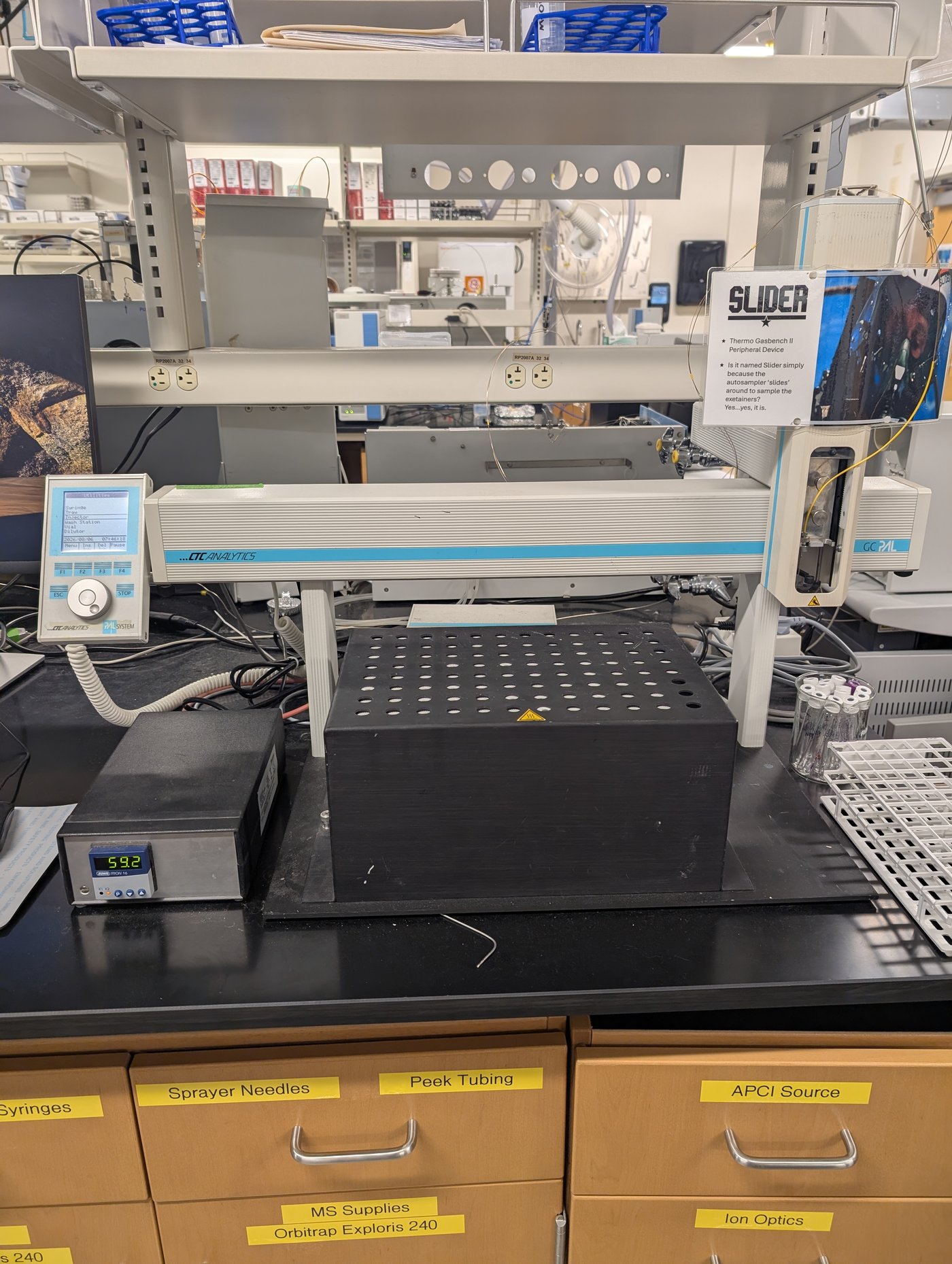
Slider (Thermo Gasbench II) — carbon and oxygen isotope analysis of carbonates using the Gasbench.
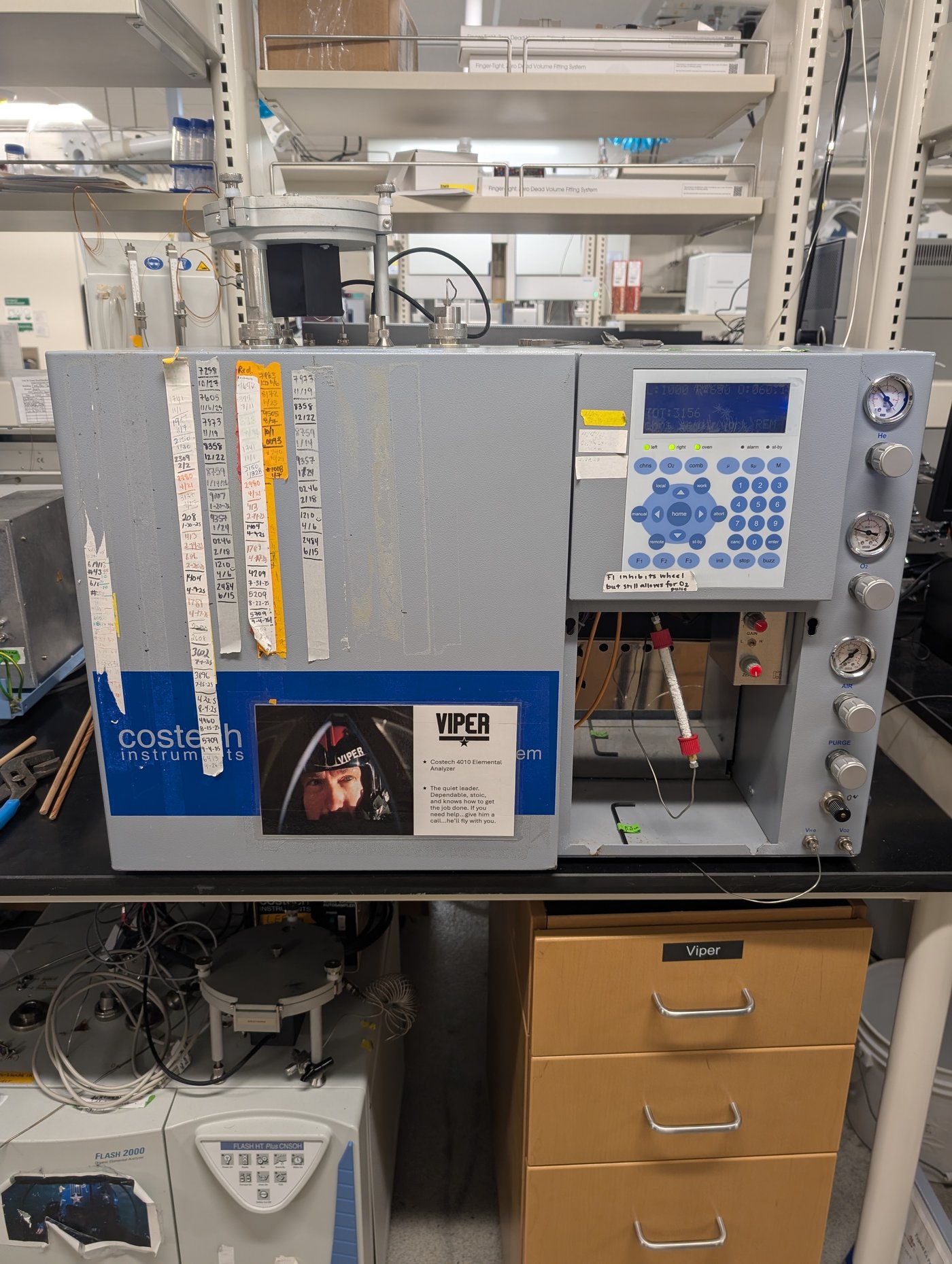
Viper (Costech 4010 Elemental Analyzer) — carbon and nitrogen isotope analyses of combustible organics on the elemental analyzer isotope ratio mass spectrometer (EA-IRMS).
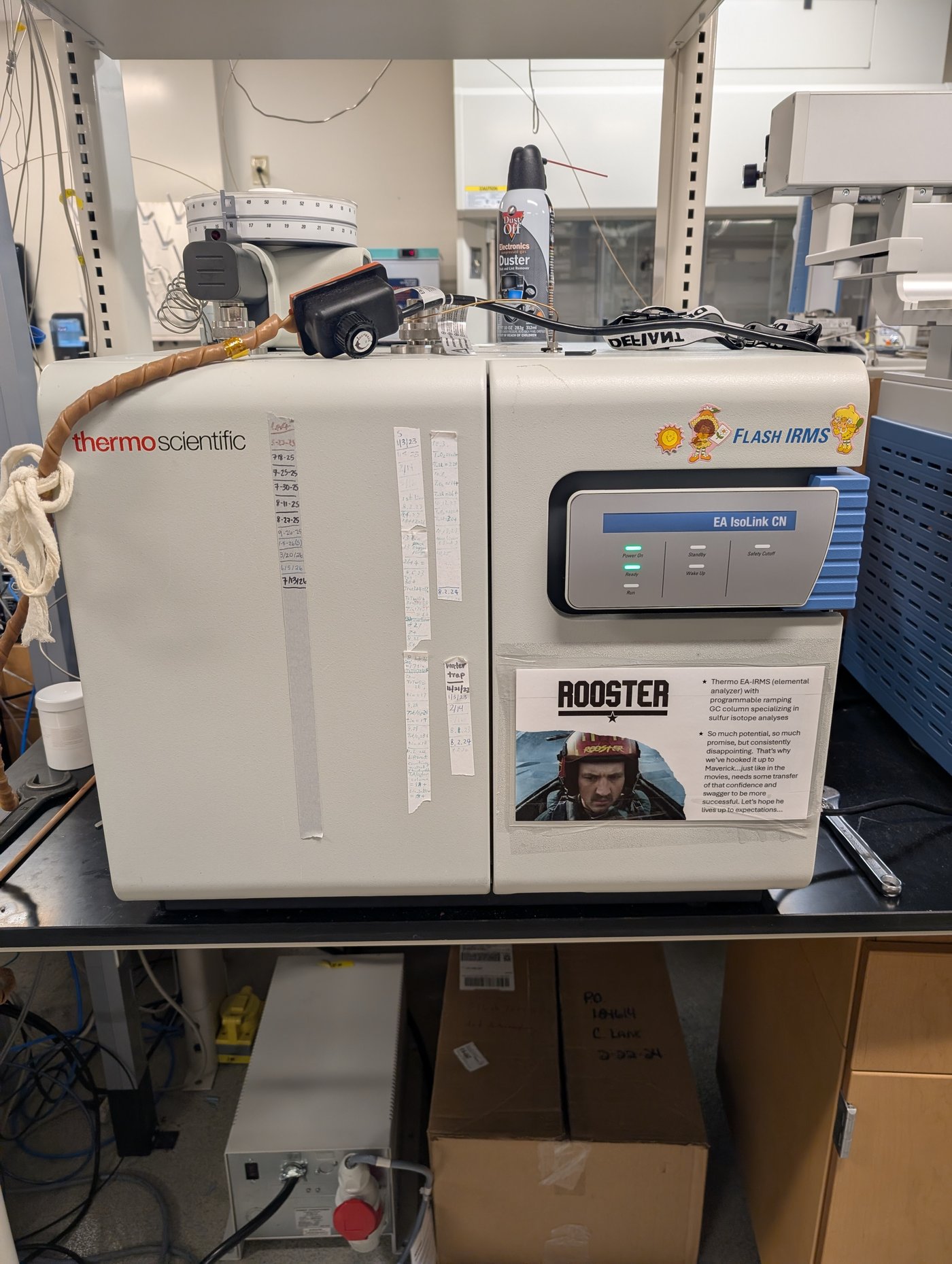
Rooster (Thermo Flash CNS Elemental Analyzer) — sulfur isotope analysis of organic compounds using the elemental analyzer isotope ratio mass spectrometer (EA-IRMS).
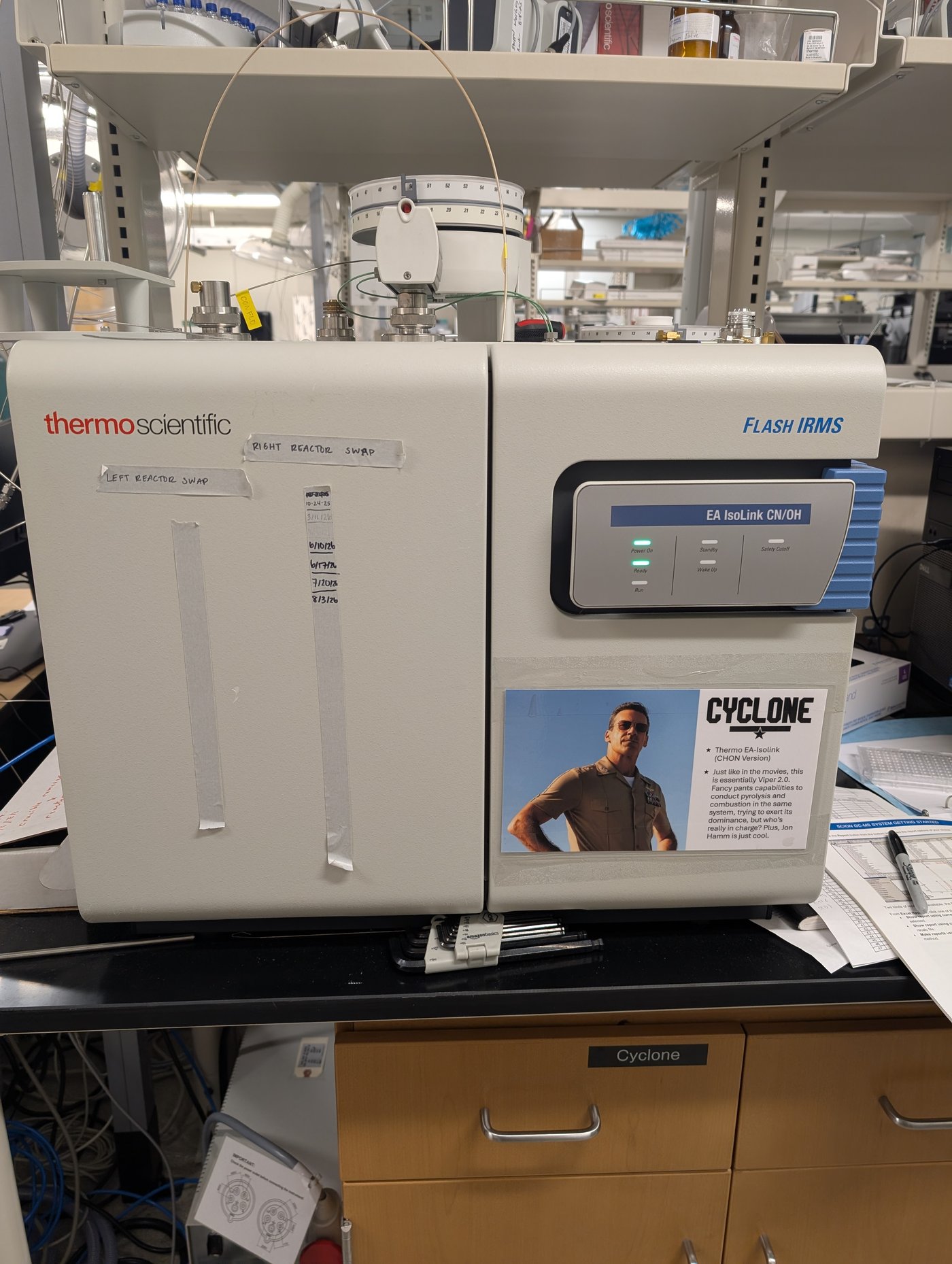
Cyclone (Thermo Flash CNOH High Temperature Conversion Elemental Analyzer) — hydrogen and oxygen isotope analysis of organic solids or small-volume liquids via high-temperature conversion elemental analysis (HTC-EA).
Thermo Gasbench II
Costech 4010 Elemental Analyzer (EA)
Thermo Flash CNS Elemental Analyzer (EA)
Thermo Flash CNOH High Temperature Conversion Elemental Analyzer (HTC-EA)
Compound-specific stable isotope analyses
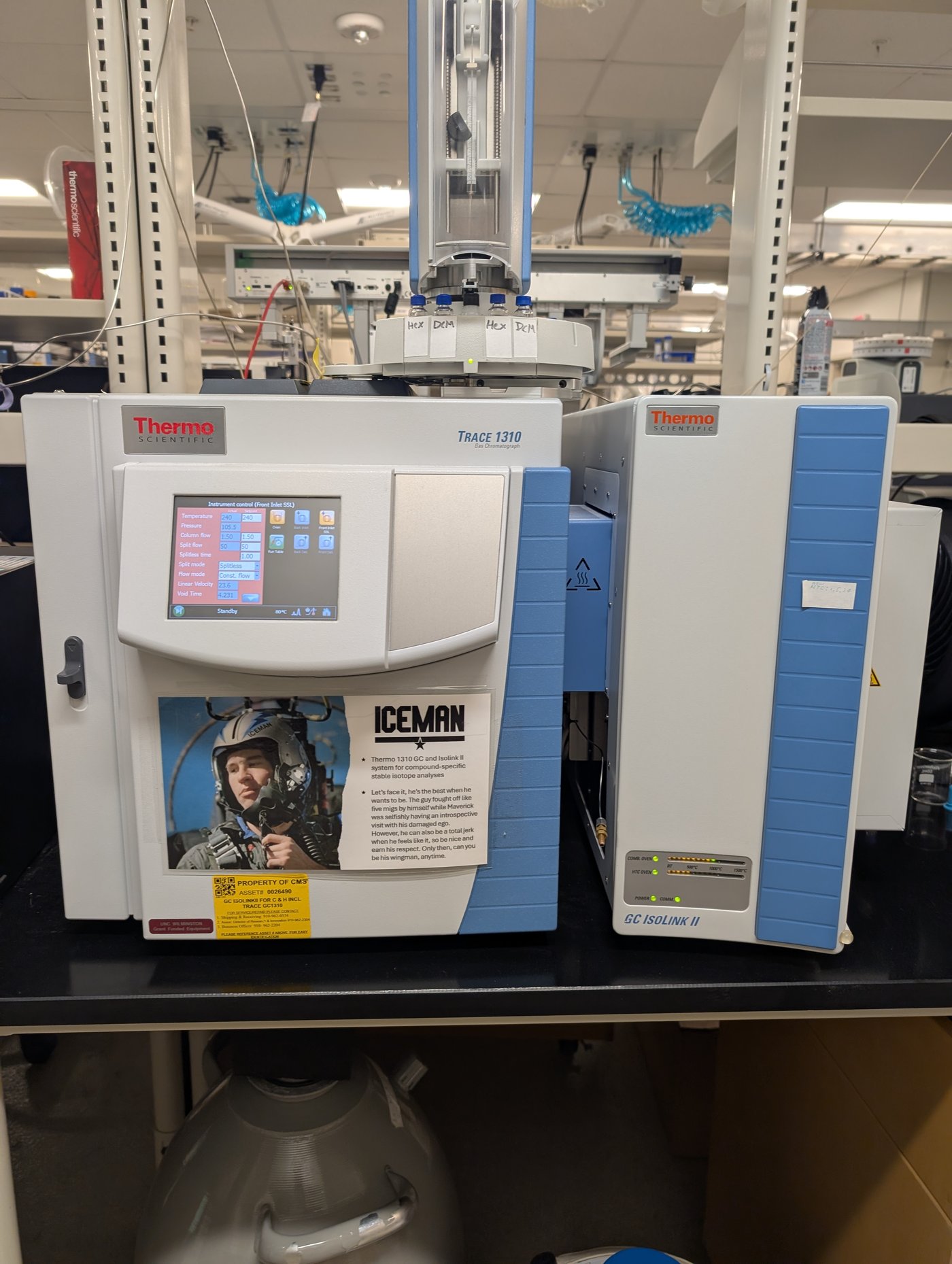
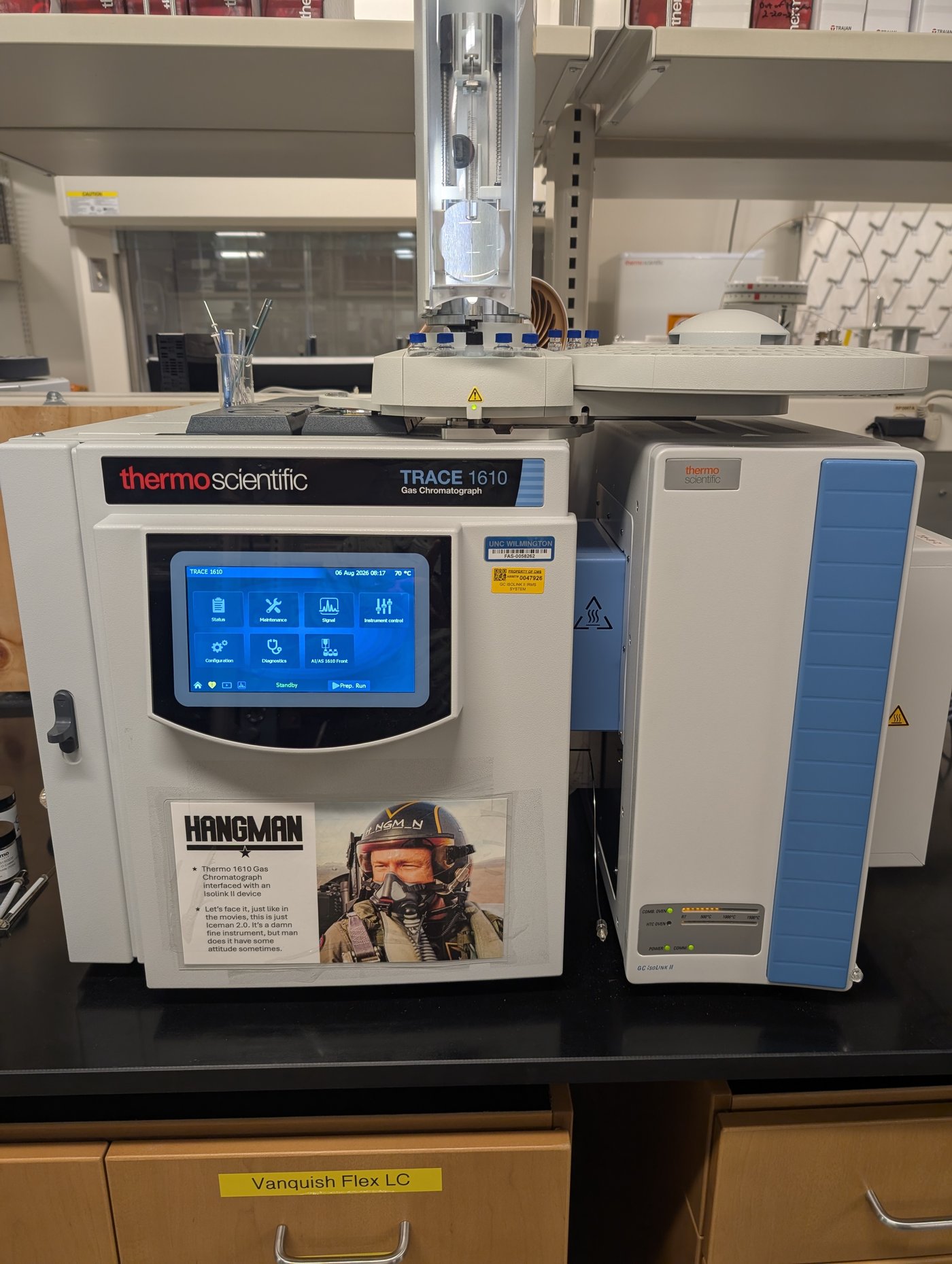
Iceman (Thermo 1310 Gas Chromatograph and GC Isolink II) & Hangman (Thermo 1610 Gas Chromatograph and GC Isolink II) — carbon, nitrogen, and hydrogen isotope analysis of individual organic compounds using the gas chromatograph isotope ratio mass spectrometer (GC-IRMS).
Thermo 1310 Gas Chromatograph and GC Isolink II
Thermo 1610 Gas Chromatograph and GC Isolink II
Stable isotope instrument time is generally scheduled in four consecutive weekday blocks (nine for compound-specific analyses, given longer run times), with the remainder of each week reserved for maintenance. A brief training session with FLITES personnel is required before independent use of any instrument.